

Quick Summary
The best recovery gear for runners depends on the problem you are solving. Use a foam roller or massage stick for calf and quad tightness, compression for heavy legs after long runs, and a foot massager for sore feet. Match one tool to one symptom before buying more.
- Start with the symptom, such as heavy legs, sore feet, or localized tightness, before choosing a product.
- Use a massage tool within an hour after a hard run for five to ten minutes on calves and quads.
- Compression for 20 to 30 minutes later in the day is a reasonable window; longer is not automatically better.
- Treat magnesium balms as comfort products, not as a way to absorb meaningful magnesium through the skin.
- Test one tool for two weeks and track how your legs feel before adding a second.
Table of Contents
- Which Recovery Gear Do Runners Actually Need in 2026?
- Matching Recovery Gear to Your Running Problem
- Foam Roller for Runners: What It Does and Where It Falls Short
- Massage Gun for Runners: When Percussion Helps
- Compression Boots for Runners: Price, Pressure and Real-World Use
- Foot and Calf Recovery Tools, Including Soaks and Balms
- Running Recovery Supplements and Topicals: What the Evidence Supports
- Building a Post-Run Routine on a Real Budget
- Choosing Your First Recovery Tool This Week
- Frequently Asked Questions
Which Recovery Gear Do Runners Actually Need in 2026?
Last Updated: November 22, 2026
Runners rarely lack recovery gear. They lack a clear answer to which piece actually helps their legs. The best recovery gear for runners depends on the problem you are trying to solve, whether that is tight calves after a long trail run, lingering soreness after speed work, or swelling after a day on your feet. Crest and Calm offers a curated selection of recovery tools, from compression boots to foot massagers to topical balms, and this guide walks through how to match them to your training.
Use this as a practical filter rather than a list of promises.
Matching Recovery Gear to Your Running Problem
Start with the symptom, not the product. Tight calves, sore feet, and heavy legs call for different tools.
- Heavy, swollen legs after long runs: compression boots or a compression sleeve.
- Sore feet and plantar tension: a foot massager.
- Localized muscle tightness: a topical roll-on or balm.
- Generalized fatigue after hard weeks: a combined routine that rotates tools.
Matching gear to a specific problem avoids buying three tools that do the same job.
Foam Roller for Runners: What It Does and Where It Falls Short
A foam roller is the classic self-myofascial release tool, and it is a reasonable starting point for many runners. It applies pressure along the calves, IT band area, and quads, and many runners use it to ease tension before or after a session.
Its limits are real. A foam roller demands technique and body control, and it cannot reach the calf or foot as easily as a dedicated tool. Beginners often roll too fast or too hard. If you find yourself wincing through the whole session, reduce pressure and slow down.
Massage Gun for Runners: When Percussion Helps
Percussion devices deliver fast, targeted pulses into muscle. They suit runners who want to work a specific spot without rolling across a whole leg.
Use one for short sessions on calves or quads, not for long periods over one area. Avoid direct pressure on bone, joints, or any area that feels bruised or injured. If pain persists, a doctor or physical therapist should evaluate it rather than a device.
Compression Boots for Runners: Price, Pressure and Real-World Use
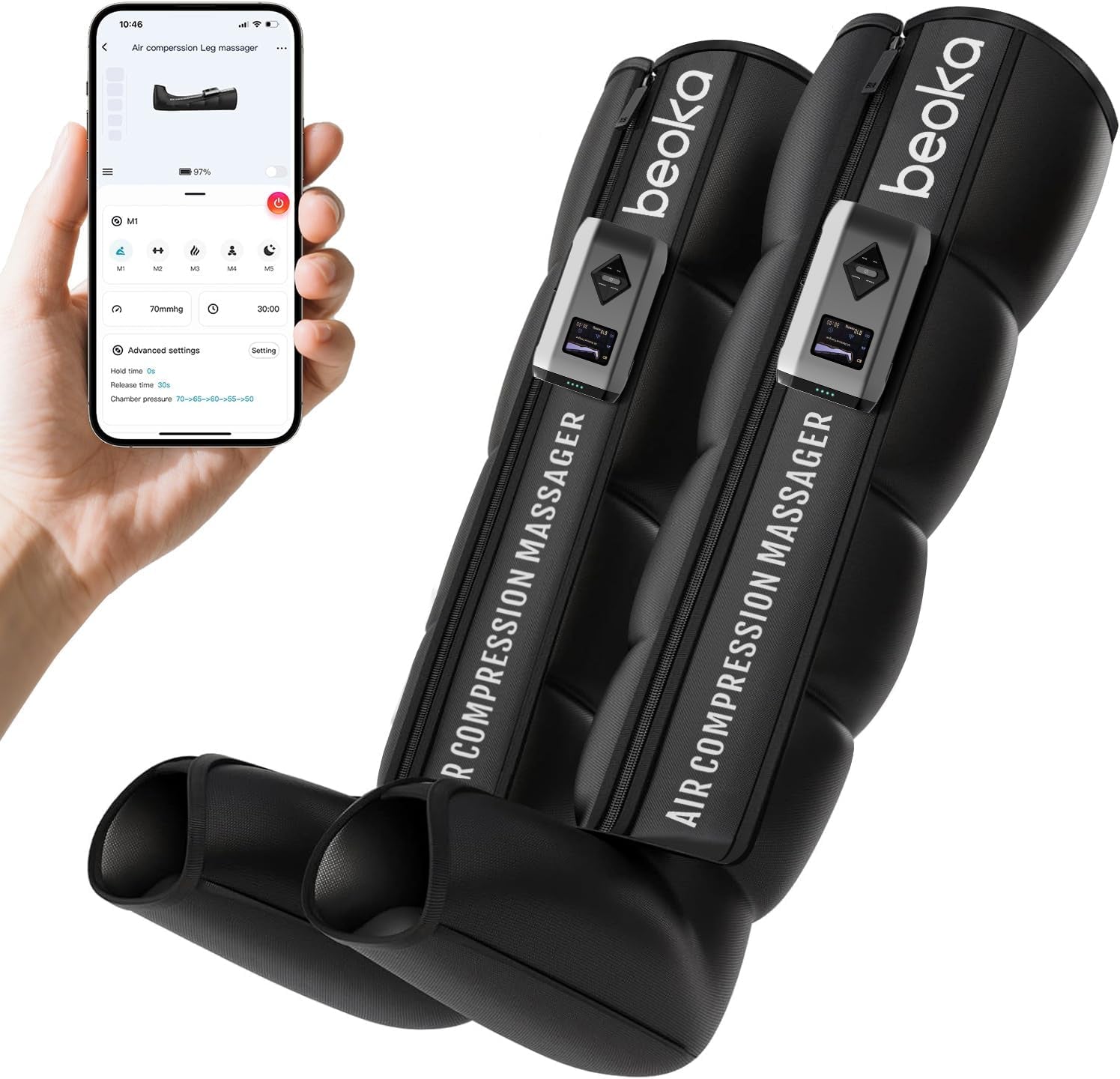
Our RecoveryFlow Compression Boots, priced at $599.00, use sequential air compression with up to 270 mmHg of pressure, adjustable down to 60 mmHg for gentler sessions. The boots run 12 modes, a 15-to-60-minute timer, and a 3-hour battery at maximum pressure, with no cord or pump unit needed.
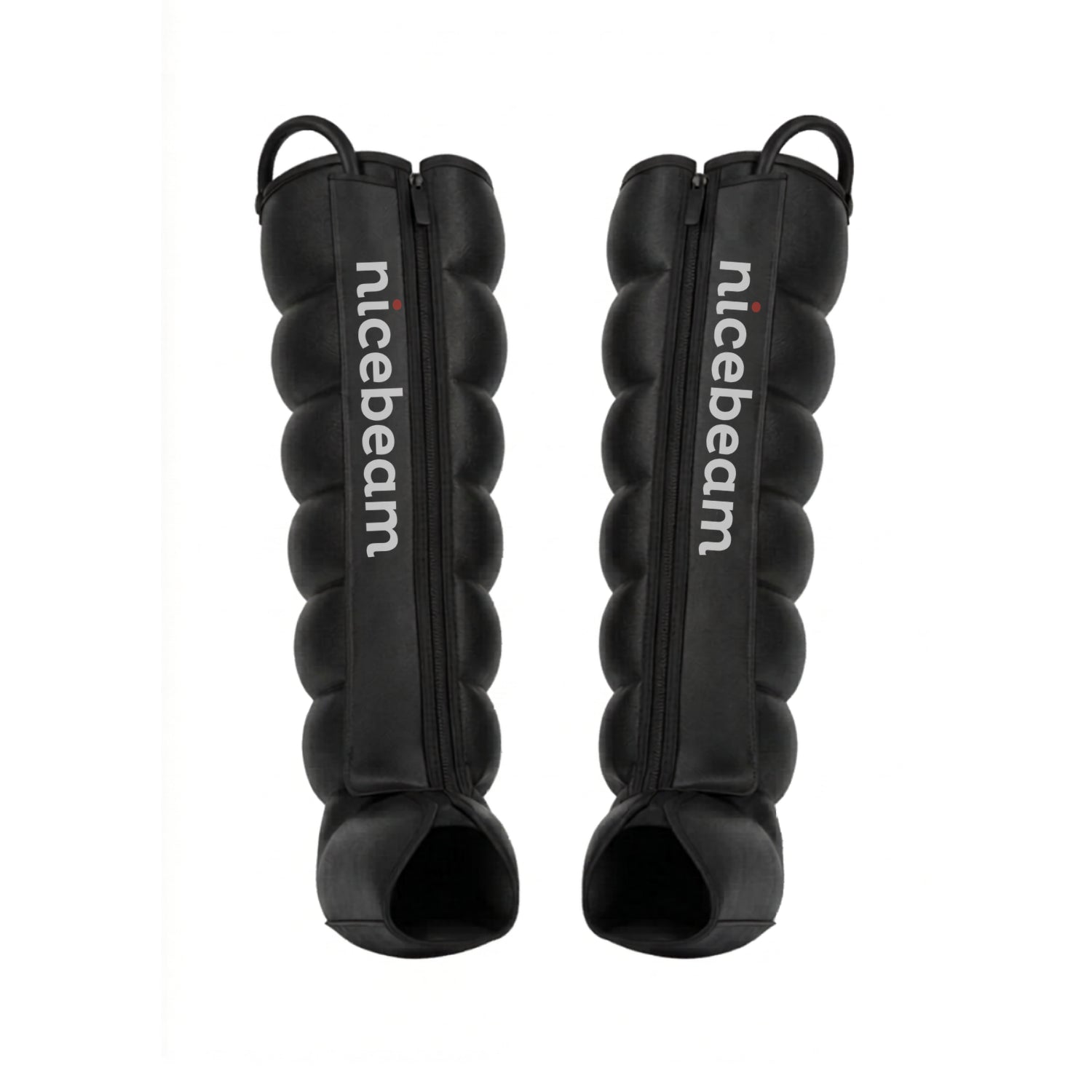
The Ease Boots, at $819.99, offer 15 intensity levels, five massage modes, and up to two hours of cordless use, plus app control. To compare the full range of boots, see our compression therapy category. Because compression boots are a meaningful purchase, compare pressure range, battery life, and sleeve sizing before you decide. Check the sizing chart for your calf measurement, and treat any pressure above a comfortable level as a reason to stop.
Watch out: compression at high settings is not appropriate for everyone. If you have a medical condition, ask a clinician first.
Best for: runners who log high weekly mileage and want a home setup they can use while resting. Skip if: you only run a few short sessions a week and do not need a large-ticket purchase.
The two compression boot models covered in this section differ mainly in price, pressure range and battery life.
| Model | Price | Key spec |
|---|---|---|
| RecoveryFlow Compression Boots | $599.00 | Up to 270 mmHg; 3-hour battery |
| Ease Boots | $819.99 | 15 intensity levels; up to 2 hours cordless |
Foot and Calf Recovery Tools, Including Soaks and Balms
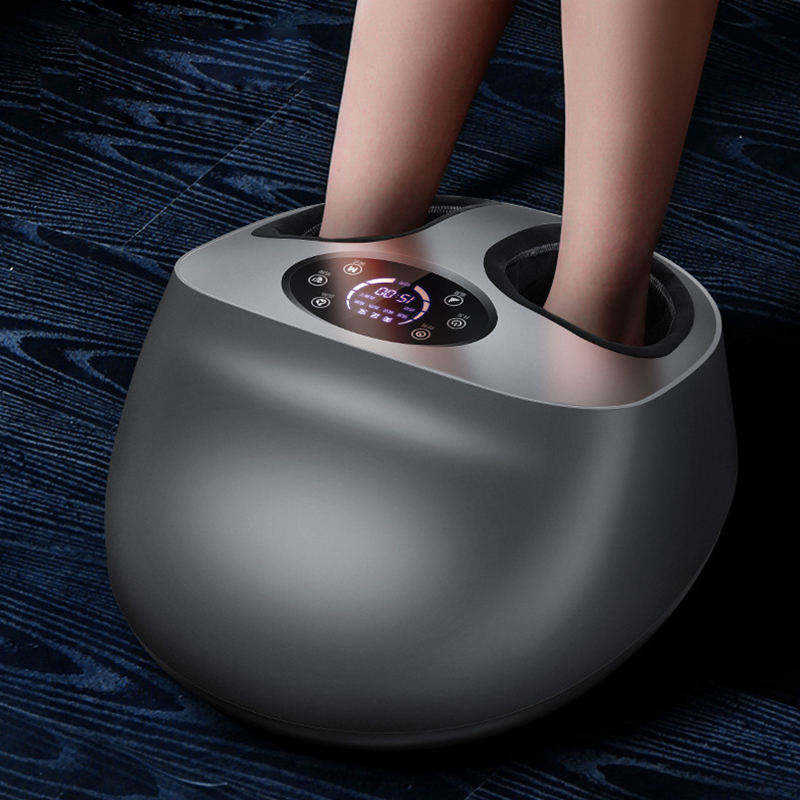
Foot fatigue is common, and our VIP Air Compression Foot Massager, at $389.00, combines Shiatsu massage with air compression in a basin sized for most foot sizes. You can also browse our recovery balms to see the topical options available. It runs on AC220V power, so confirm your outlet and voltage before ordering.
The Magnesium & Recovery Balm - 3 Natural Solutions set, at $112.00, bundles three balms, including a Recovery Balm with arnica and magnesium chloride.
Running Recovery Supplements and Topicals: What the Evidence Supports
Most recovery marketing blurs two very different claims: temporary comfort and faster tissue healing. Those are not the same thing, and the evidence behind them is not equally strong. This section grades what is actually supported so you can spend on comfort without expecting repair.
What the research supports reasonably well
- Massage (including percussion and handheld tools): Multiple small trials and reviews suggest massage can reduce perceived soreness and improve range of motion for a day or two after exercise. The effect is modest and largely about how the muscle feels, not measured markers of tissue repair. A common pattern is a short window of relief rather than accelerated healing.
- Compression after exercise: Sequential and static compression are associated with reduced swelling and improved comfort in the hours after hard efforts. Benefits appear to come from gentle pressure that supports venous return, not from squeezing hard. Higher pressure is not automatically better.
- Topical cooling or warming agents (menthol, camphor, arnica): These create a sensory distraction, cooling or warming, that can make a tight area feel looser.
- Magnesium applied to the skin: Absorbing meaningful magnesium through intact skin is not well supported. A balm with magnesium chloride may feel pleasant and may help you massage the area, but treat it as a comfort product rather than a mineral supplement.
What the evidence does not support well
- Claims of 'flushing lactic acid': Lactate clears on its own within roughly an hour of exercise. No roller, gun, boot, or balm speeds that process in a way that changes recovery.
- Oral recovery supplements marketed for runners: Most have small or mixed trial support. Creatine has reasonable evidence for strength and repeated-sprint performance, but it is a performance aid, not a proven soreness cure. Branch-chain amino acids, tart cherry, and collagen show promise in some small studies but are not settled. Treat any single-product 'proven to speed recovery' claim with skepticism.
- Topicals that promise 'faster healing': No over-the-counter balm has strong evidence for accelerating muscle repair. If a product claims to heal an injury, that is a signal to check with a clinician.
How to use this without wasting money
Rank tools by what you actually get: a massage tool or compression sleeve buys you comfort and routine; a balm buys you a sensory cue and a reason to massage; a supplement buys you a gamble unless a clinician recommends it for a specific reason. If you want the most reliable comfort per dollar, a foam roller or massage stick plus a consistent ten-minute routine outperforms most supplements.
Watch out: check with a pharmacist or clinician before adding a topical or oral supplement if you take medication or have a medical condition.
Building a Post-Run Routine on a Real Budget
This routine is built around timing and training load, so you can start with the tools you already own.
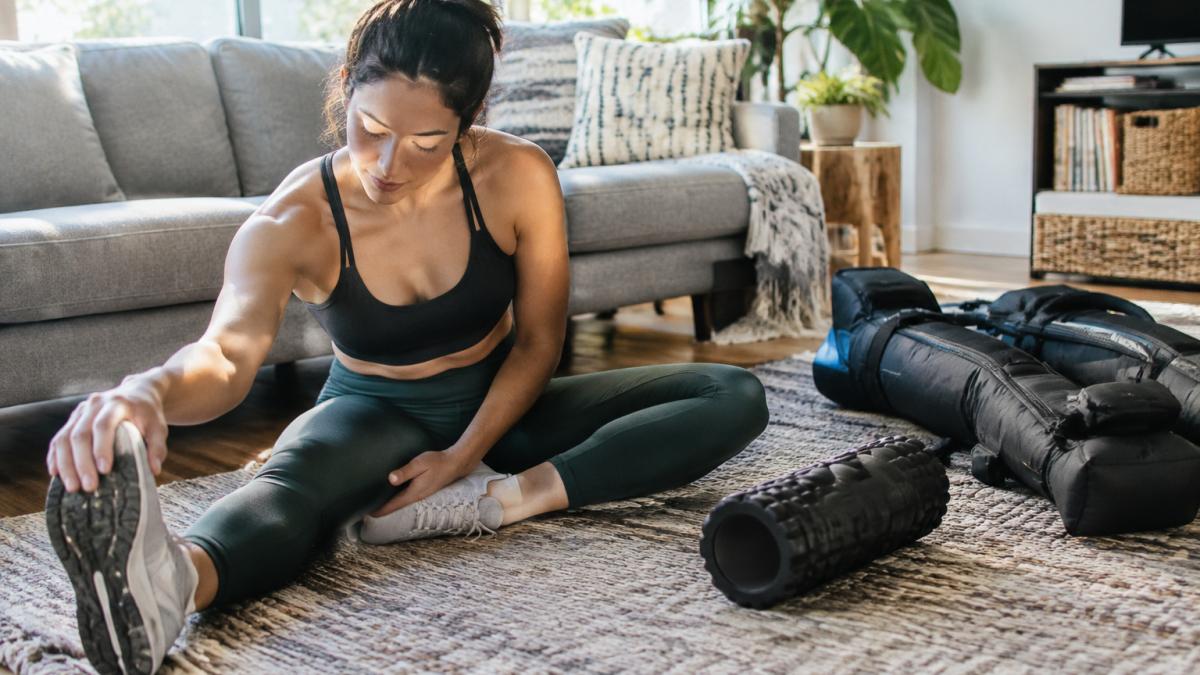
The timing rules that matter
- Immediately after a run (first 10 minutes): Walk for five minutes to bring your heart rate down, then do light movement, ankle circles, calf raises, gentle leg swings. Skip deep pressure here; muscles are warm and more sensitive to over-pressure.
- Within an hour after a hard or long run: Use a massage stick or foam roller for five to ten minutes on calves and quads, or a percussion gun for 60 to 90 seconds per area. Keep pressure moderate, if you are wincing, you are going too hard.
- Later in the day or evening: Compression for 20 to 30 minutes is a reasonable window; longer is not automatically better. Elevate your legs for 10 to 15 minutes. A topical balm can be applied after showering if the area feels tight.
- Before a run: Keep it short, two to three minutes of light rolling or a brief massage-gun pass to feel loose. Save deeper work for after.
Routine by training day
- Easy or rest day: Five minutes of rolling, optional compression in the evening. This is the day to skip tools entirely if you feel fine.
- Speed or hill day: Prioritize calves and quads. Roller or stick for five to ten minutes, percussion for one to two minutes total, compression for 20 minutes later if available.
- Long run day: Focus on feet and calves. A foot massager for 10 to 15 minutes, compression for 20 to 30 minutes, and elevation. Keep pressure gentle, swelling after a long run responds better to moderate compression than to high settings.
- Race week: Reduce novelty. Do not introduce a new tool or a high-pressure setting in the days before a race; stick to what your legs already know.
Budget tiers and cost-per-use
- Low-cost (under roughly $50): A foam roller, a massage stick, and a pair of compression socks cover most of the routine. Used four times a week for a year, a $30 roller works out to pennies per session. This tier delivers the best comfort-per-dollar for most runners.
- Midrange (roughly $100 to $300): A percussion massage gun or a foot massager adds targeted relief for specific problems. A gun used three times a week pays for itself in convenience if you would otherwise book occasional professional massage.
- Premium (roughly $400 and up): Compression boots are the big-ticket item. They are worth considering if you log high weekly mileage and will use them several times a week; if you run a few short sessions a week, the cost-per-use rarely justifies them. Compare pressure range, timer, battery life, and sleeve sizing before buying, and check the sizing chart against your calf measurement.
A simple weekly template
- After every run: five-minute walk, then five minutes of light rolling or stick work on calves and quads.
- Three days a week: add compression for 20 to 30 minutes in the evening.
- Once a week: 10 to 15 minutes on feet with a foot massager or manual massage.
- Daily: 10 to 15 minutes of legs elevated, especially after long or hard days.
Watch out: if an area is swollen, bruised, hot to the touch, or painful at rest, have it assessed by a qualified professional before using any recovery tool.
Choosing Your First Recovery Tool This Week
Pick one problem, then choose one tool that addresses it. If your calves feel heavy after long runs, start with compression. If your feet ache after standing all day, try the foot massager. Use it for two weeks, track how your legs feel, and only then decide whether a second tool adds value.
Crest and Calm offers these tools. Browse our recovery collection to find a starting point that fits your training and budget.
Frequently Asked Questions
What is the best recovery equipment for runners?
There is no single best item. The right recovery gear depends on the problem you are solving. Compression boots are one option for tired legs, a foam roller is one option for the calves and IT band, and a percussion massage gun is another. Crest and Calm's RecoveryFlow Compression Boots start at $599.00 and offer up to 270 mmHg of adjustable pressure, while the Ease Boots start at $819.99 with 15 intensity levels. Start with the problem you feel most often, then choose the tool that targets it.
Do massage guns help with running recovery?
Massage guns are one option for localized tightness in calves, quads and hamstrings. They are most useful for short, targeted sessions after a run rather than as a replacement for training or rest. Use light pressure on bony areas and avoid direct contact over injuries. If soreness is severe, persistent or accompanied by swelling, see a healthcare professional rather than relying on a massage tool alone.
Are foam rollers useful for runners?
Their limit is that they cannot reach deep into the muscle the way a clinician can, and rolling directly over a sore or injured area can hurt. Use a roller for 30 to 60 seconds per muscle group, and pair it with light stretching for best results.
What recovery tools help with sore feet after running?
For sore feet and calves, the VIP Air Compression Foot Massager, at $389.00, combines Shiatsu massage with air compression. The Gal Oval Ice Bath Tub with Cover, priced at $419.99, holds 129 gallons and its water temperature range spans 7°F to 107°F. The Recovery Balm is also available in the Magnesium & Recovery Balm - 3 Natural Solutions set, at $112.00.
